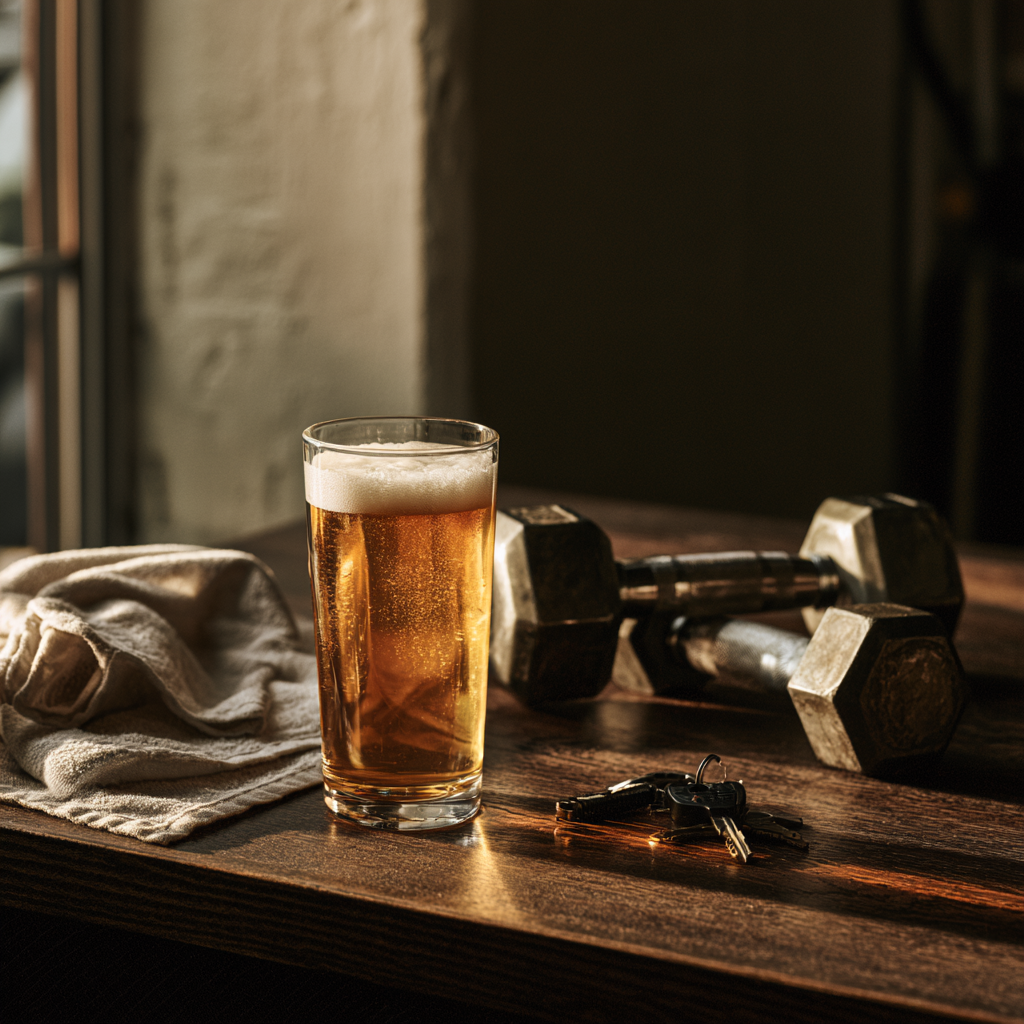
What That Night Out Really Costs Your Training
Most people who train know that a heavy night out does not exactly help their progress. What is less widely understood is just how many different ways alcohol works against a fitness goal at once. It is not simply a matter of extra calories. Alcohol interferes with muscle repair, degrades the quality of your sleep, slows fat burning, and weakens the self-control that keeps your eating on track. Understanding each of these effects — and, crucially, how they scale with the amount you drink — lets you make an informed choice rather than a guilty one.
Alcohol Blunts Muscle Repair
The most direct hit is to muscle protein synthesis, the process by which your body repairs and builds muscle after training. In a well-controlled crossover study, physically active men completed a demanding session of weights and cycling, then consumed protein either on its own or alongside alcohol. Even though they took in an amount of protein known to maximise muscle building, adding alcohol cut their rate of muscle protein synthesis by around 24%. When the alcohol was paired with carbohydrate instead of protein, the reduction reached 37%.
The important message here is that you cannot simply "protein your way out" of a drinking session. The men in the study ate optimally and still saw their recovery suppressed. If you have trained hard and then drink heavily that evening, you are effectively paying for the workout without collecting the full reward. Over weeks and months of repeated occasions, that blunted adaptation adds up to slower progress in strength and muscle.
You cannot out-eat a heavy night. Even a textbook-perfect protein intake did not stop alcohol from cutting muscle repair by roughly a quarter.
The Dose Is Everything
Before writing off alcohol entirely, it is worth looking at how much these participants drank. The dose used was 1.5 grams of alcohol per kilogram of body weight — the equivalent of roughly twelve standard drinks in a single sitting. This is a binge, not a glass of wine with dinner, and it is typical of the research in this area, which is deliberately designed to expose the effects of heavy intake. A drink or two is very unlikely to produce anything close to the same impairment.
This is the single most useful thing to take from the evidence: the harm scales sharply with quantity. Moderate, occasional drinking sits in a very different category from regular heavy sessions. The goal for most people is not lifelong abstinence but keeping the amount low enough, and the occasions infrequent enough, that alcohol never becomes the anchor dragging on their results.
It Wrecks the Sleep You Depend On
Alcohol has a deceptive relationship with sleep. It is a sedative, so it often helps people fall asleep faster, which creates the illusion that it aids rest. In reality it fragments sleep architecture and suppresses rapid eye movement (REM) sleep, the restorative phase your body relies on. Since deep and REM sleep are when much of your physical recovery and hormone release occur, poor sleep quality directly undermines the repair you are trying to promote through training.
The knock-on effects are measurable the next day. Heavy evening drinking has been shown to reduce lower-body power output the following morning, meaning your session suffers before you have even warmed up. Combine impaired muscle repair overnight with reduced power the next day, and a single heavy night can compromise two days of training rather than one.
Fat Loss Goes on Hold
Alcohol carries 7 calories per gram — nearly as many as pure fat — with no useful nutrients attached. But the calorie count is only part of the story. Because alcohol is a toxin, your body prioritises clearing it above almost everything else, and while it does so, fat burning is effectively paused. Any fat you would otherwise have been oxidising sits on hold until the alcohol is dealt with, which is why frequent drinking can stall fat loss even when the calories seem to add up on paper.
Then there is what comes with the drinking. Alcohol lowers inhibition and stimulates appetite, which is why late-night takeaways and picking at snacks feel so natural after a few rounds. The calories in the drinks themselves are frequently dwarfed by the food they encourage, and none of it tends to be counted in the moment.
While your body is busy clearing alcohol, fat burning waits its turn. Add the food that drinking invites, and the real cost is rarely just the pints.
Drinking Without Derailing Your Goals
None of this means you must give up alcohol to make progress. It means being deliberate about how and when you drink, so the damage stays small. A few practical principles keep the cost manageable:
- Keep it moderate and occasional — the harm scales steeply with quantity, so a couple of drinks is a world away from a heavy session
- Avoid drinking heavily on the same day as a key training session, when muscle repair is most active
- Put your most important workouts on days when you have not been drinking the night before, to protect your power and focus
- Alternate alcoholic drinks with water to limit both the total intake and the dehydration alcohol causes
- Eat a proper, protein-rich meal beforehand so you are less likely to graze on whatever is around later
- Count the drinks — and the food that comes with them — in your daily calories rather than treating them as free
The Bottom Line
Alcohol works against a fitness goal on several fronts at once: it suppresses muscle repair even in the presence of good nutrition, fragments the sleep that drives recovery, pauses fat burning, and quietly encourages overeating. But the severity depends almost entirely on the dose. Occasional, moderate drinking is compatible with real progress; frequent heavy sessions are the thing to avoid. If you do choose to drink, account for it honestly — Helic lets you fit those calories into your daily targets, so a social night stays a considered choice rather than a hidden setback.