Eating for the Gym: A Practical Guide to Fuelling Your Training
You can train hard, sleep well, and stay consistent — but if your nutrition is off, you'll always be leaving results on the table. Eating for the gym isn't about following a rigid plan or timing every meal to the minute. It's about understanding what your body needs at different points in the day and making smart, repeatable choices that support both your performance and your recovery.
The Three Macronutrients: What Each One Does
A balanced diet for training starts with understanding what carbohydrates, protein, and fat each contribute. Getting the balance right across your day is more important than obsessing over any single meal.
- Carbohydrates: your body's primary fuel source during moderate to high intensity exercise. Stored as glycogen in your muscles and liver, they power everything from a heavy squat to a long run.
- Protein: the building block of muscle tissue. Protein repairs the microscopic damage caused by training and drives adaptation — making you stronger and more resilient over time.
- Fat: essential for hormone production, joint health, and absorbing fat soluble vitamins (A, D, E, K). Fat also provides a steady fuel source during lower intensity activity.
Pre Workout Nutrition
What you eat before training sets the tone for the session. The goal is to arrive with enough energy to perform — without feeling sluggish or uncomfortably full. The ideal pre workout meal is rich in carbohydrates, moderate in protein, and relatively low in fat and fibre (both of which slow digestion and can cause discomfort mid session).
Aim to eat a proper meal 2–3 hours before training. If you're training first thing in the morning or have less time, a smaller, easily digestible snack 30–60 minutes before is a practical alternative.
- 2–3 hours before: oats with banana and a scoop of protein powder, rice with chicken and vegetables, wholegrain toast with eggs
- 30–60 minutes before: a banana, rice cakes with peanut butter, a small yoghurt with fruit, or a handful of dates
- What to avoid: heavy, high fat meals (burgers, full English) or large amounts of raw vegetables right before intense training
Fuelling During Your Workout
For most gym sessions lasting under 60–75 minutes, you don't need to eat during your workout. Water is sufficient. However, if you're training for longer — endurance runs, long cycling sessions, or extended team sport — consuming fast digesting carbohydrates mid session can help maintain performance and delay fatigue.
- Sessions under 60 minutes: water only is fine
- Sessions 60–90 minutes: 30g of carbohydrates (a banana, energy gel, or sports drink)
- Sessions over 90 minutes: 30–60g of carbohydrates per hour from easily digestible sources
Hydration matters more than most people realise. Even mild dehydration — as little as 2% of bodyweight — measurably reduces strength, endurance, and cognitive performance. Drink water consistently throughout the day, not just during the session itself.
Post Workout Nutrition: Recovery Is Where Gains Are Made
Training breaks your muscles down. Recovery builds them back up stronger. Post workout nutrition accelerates that process by providing the raw materials your body needs: protein to repair and build muscle tissue, and carbohydrates to replenish the glycogen you burned.
The best post workout meal is one you'll actually eat — a balanced combination of protein and carbohydrates consumed at some point in the hours after training.
The "anabolic window" — the idea that you must eat within 30 minutes of finishing training or the gains are lost — is significantly overstated. Research shows the window for post workout nutrition is closer to several hours, not minutes. What matters is that you eat a protein rich meal at some point after your session, not that you sprint to the kitchen the moment you rack the bar.
- Protein target: 20–40g of protein in your post workout meal
- Carbohydrate target: 1–1.2g per kg of bodyweight to restore glycogen
- Good options: chicken and rice, salmon with sweet potato, Greek yoghurt with berries and granola, a protein shake with a banana
Building a Balanced Plate Day to Day
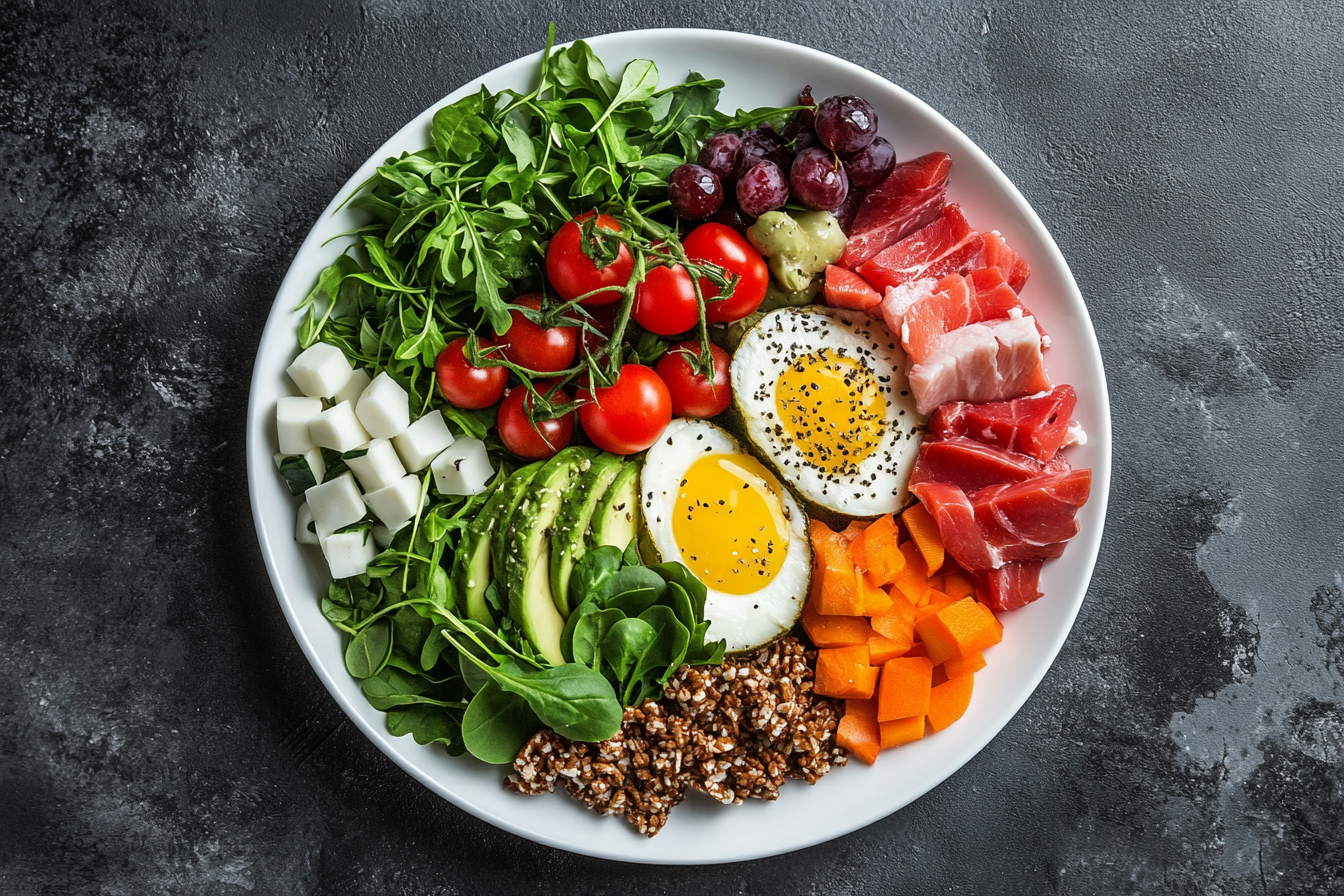
Beyond workout timing, the foundation of good gym nutrition is a consistently balanced diet across the whole day. No individual meal matters as much as the cumulative pattern of what you eat week to week. A simple framework for building a balanced plate:
- Half your plate: vegetables and fruit — for fibre, micronutrients, and satiety
- A quarter of your plate: quality protein — chicken, fish, eggs, tofu, legumes
- A quarter of your plate: complex carbohydrates — rice, oats, potatoes, wholegrain pasta
- A thumb sized portion of healthy fats: olive oil, avocado, nuts, or oily fish
Micronutrients That Matter for Training
Vitamins and minerals do not directly build muscle, but deficiencies in key micronutrients can significantly impair performance and recovery. The most commonly low in active people are:
- Iron: critical for oxygen transport. Low iron causes fatigue and poor endurance. Found in red meat, lentils, spinach, and fortified cereals
- Magnesium: involved in over 300 enzymatic reactions including muscle contraction and energy production. Found in nuts, seeds, dark leafy greens, and dark chocolate
- Vitamin D: supports muscle function and immune health. Produced by sunlight exposure; found in oily fish and eggs. Supplementation is often warranted in northern climates
- Calcium: essential for bone density and muscle contraction. Found in dairy, fortified plant milks, tofu, and leafy greens
Practical Workout Snacks
Snacking intelligently around training is one of the easiest ways to hit your daily protein and energy targets without overhauling your diet. These snacks are quick, portable, and work well in the 1–2 hours surrounding a session:
- Greek yoghurt with honey and fruit (protein + fast carbs)
- Rice cakes with nut butter and banana slices
- A hard boiled egg and a handful of oatcakes
- Cottage cheese with pineapple
- A small handful of mixed nuts and dried fruit
- Edamame with a pinch of sea salt
The Bottom Line
Eating for the gym does not have to be complicated. Focus on hitting your daily protein target, fuelling training sessions with adequate carbohydrates, staying well hydrated, and building meals around whole foods. Get those basics right consistently and the details — meal timing, specific foods, supplements — become far less important. Helic handles the planning so you can focus on the training.