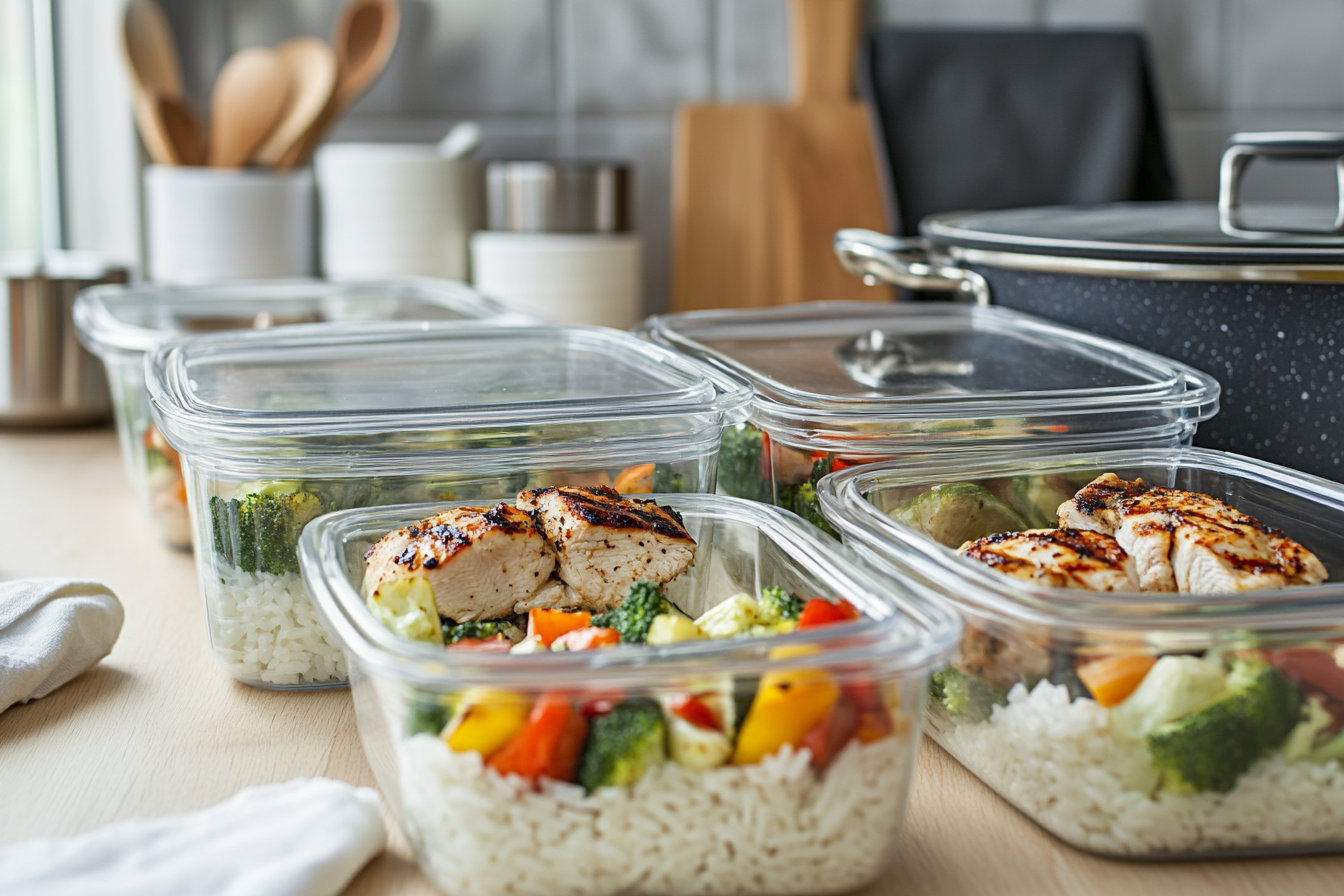
Batch Cooking, Backed by Evidence: How Planning Ahead Improves Your Diet
Batch cooking is often sold as a life hack: make a big pot on Sunday, eat well all week, spend less time at the stove. All of that is true, but it undersells the practice. A growing body of research suggests that planning and preparing meals in advance is quietly one of the most effective things you can do for the quality of your diet — and even for your long-term weight. The gap between people who plan their meals and people who improvise them turns out to be measurable, and it favours the planners.
What the Research Actually Found
The most compelling evidence comes from the NutriNet-Santé study, which analysed the habits of 40,554 French adults. Just over 57% reported planning their meals at least occasionally, and those who did stood apart on several fronts. Meal planners were 25% more likely to sit in the top quartile for overall food variety, and 13% more likely to closely follow national nutritional guidelines. In practical terms, planning ahead led to more diverse plates and diets that lined up more closely with what a dietitian would recommend.
The link extended to body weight. Among women, meal planners had notably lower odds of obesity — around 21% lower — as well as a modestly reduced likelihood of being overweight. Among men, planners showed roughly 19% lower odds of obesity. This does not prove that planning alone causes a healthier weight; people who plan may differ in other ways too. But the association is consistent, biologically plausible, and points in a clear direction: deciding what you will eat before hunger and convenience decide for you tends to produce better choices.
Planning ahead means your food decisions are made by a calm version of you with a shopping list — not a tired, hungry version of you staring into an empty fridge at 7pm.
The benefits appear to last, too. Longitudinal research following adults using digital meal-planning tools found that weight loss was sustained not just for a few weeks but across 12, 24, and even 36 months. That durability is the hard part of any dietary change, and it is precisely where planning earns its keep: it turns good intentions into a repeatable system rather than a burst of motivation that fades.
Why Planning Beats Willpower
The reason meal planning works is not mysterious. Most poor food decisions are made in the moment, under pressure — tired after work, short on time, and facing a fridge with no obvious meal in it. In that state, the path of least resistance is a takeaway or something ultra-processed. Batch cooking removes the decision entirely. When a balanced, home-cooked meal is already sitting in the fridge, it becomes the easy option, and the willpower you would have spent resisting temptation is simply never called upon.
Planning also improves what you buy. A shopping list built around specific meals means less impulse buying, less food waste, and a trolley weighted towards whole ingredients rather than convenience food. It tends to be cheaper, and it makes hitting your protein, fibre, and calorie targets far more realistic, because the maths has been done in advance rather than guessed at meal by meal.
How to Batch Cook Well
The mechanics of good batch cooking are simple, and a few principles make the difference between a system you stick with and one that fizzles out after a fortnight:
- Cook components, not just complete meals: a batch of a protein, a grain, and a couple of vegetables can be recombined into different meals across the week, avoiding boredom
- Choose recipes that reheat and freeze well: stews, curries, chillis, soups, roasted vegetables, and grains hold up far better than delicate salads or anything fried
- Portion into individual containers straight away, so meals are grab-and-go and portion sizes stay controlled
- Label everything with the date it was cooked, so nothing lingers unidentified at the back of the fridge
- Cook once, eat several times — but build in enough variety that you actually look forward to the leftovers
Doing It Safely
Batch cooking multiplies the amount of food you store and reheat, which means food safety matters more than it does for a single fresh meal. NHS guidance frames home food safety around four essentials, sometimes called the four Cs: cleaning, cooking, chilling, and avoiding cross-contamination. Done carelessly — large portions left to cool slowly in deep containers, food sitting out at room temperature, or dishes cooled and reheated repeatedly — batch cooking can create real risk. Done properly, it is perfectly safe.
- Cool cooked food quickly — ideally within one to two hours — by dividing it into small, shallow, airtight containers rather than one deep pot
- Refrigerate leftovers and eat them within three to four days; anything you want for later in the week should be frozen promptly instead
- Reheat food until it is piping hot all the way through — steaming, and at least 74°C in the centre
- Only reheat a portion once; never cool and reheat the same food several times
- Keep raw and cooked foods separate during prep, and wash hands and surfaces between them to avoid cross-contamination
Cool it fast, store it shallow, eat it within a few days or freeze it, and reheat it once until steaming. Get those four things right and batch cooking is as safe as it is convenient.
Start Small
You do not need to cook a fortnight of meals in one heroic Sunday session to see the benefit. Start by doubling a recipe you already make and freezing half, or by prepping just your lunches for the working week. The evidence does not reward marathon cooking sessions specifically — it rewards the simple act of deciding in advance what you will eat, so that the healthy choice is also the convenient one. Helic builds that structure in for you, turning your macro targets into a planned week of real meals and a shopping list to match, so the hardest part of eating well is already done before you pick up a pan.