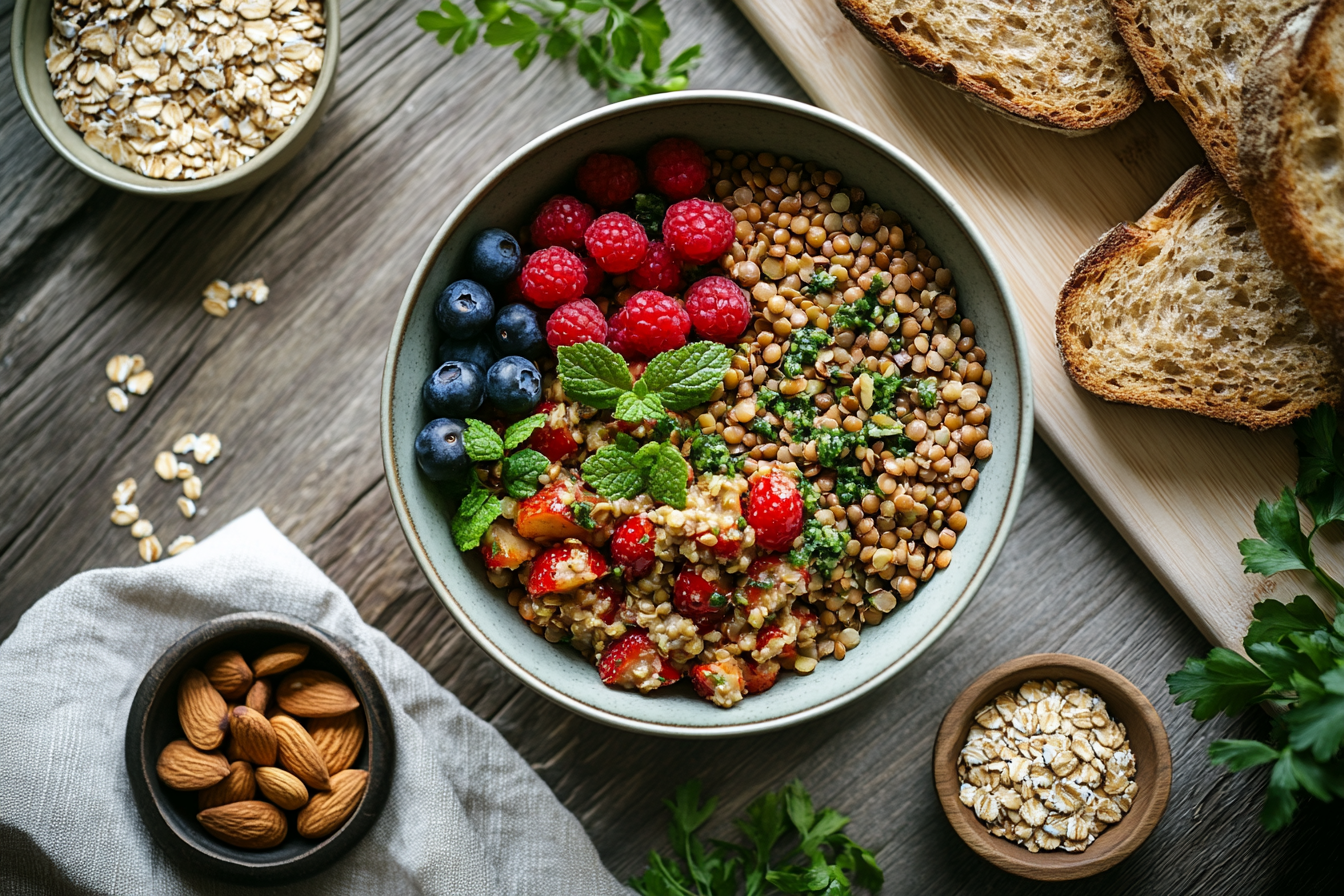
Feeding the Trillions Inside You: Why Fibre Is Your Gut's Favourite Nutrient
Inside your large intestine lives a community of trillions of microbes, collectively known as the gut microbiome. Far from being passive passengers, these bacteria are active participants in your health, influencing everything from how you digest food to how your immune system behaves and how well your body handles blood sugar. And here is the part most people miss: this vast ecosystem runs almost entirely on one thing you can choose to give or withhold at every meal — dietary fibre. Yet surveys suggest only a small minority of adults come close to eating enough of it.
Fibre Is Food for Your Bacteria
Fibre is the part of plant foods your own digestive enzymes cannot break down. Rather than being absorbed in the small intestine like most nutrients, it travels intact to the colon, where your gut bacteria ferment it. This fermentation is not a waste process — it is the engine of gut health. As bacteria break fibre down, they produce short-chain fatty acids: primarily acetate, propionate, and butyrate, generated in roughly a three-to-one-to-one ratio. These compounds are the currency through which your microbiome pays you back.
Butyrate is the standout. It supplies around 70% of the energy used by the cells lining your colon, effectively fuelling the barrier that separates your gut contents from your bloodstream. It also strengthens the tight junctions between those cells, dampens inflammatory signalling, and stimulates the production of protective mucus. In other words, the more fibre your bacteria receive, the better maintained and less inflamed your gut lining becomes.
Your gut bacteria do not just tolerate fibre — they depend on it. Deprive them, and they start eating the protective mucus lining of your gut instead.
What Happens When You Skip the Fibre
A low-fibre diet does not simply leave your bacteria idle. Deprived of their preferred fuel, they turn to the next available food source: the mucus layer that coats and protects your intestinal wall. Over time this thins the barrier, leaving the gut more permeable and more vulnerable to inflammation and pathogens. Researchers can even measure this shift through markers such as zonulin, a regulator of gut permeability; lower levels track with greater microbial diversity, a smaller waistline, and less systemic inflammation, while higher levels signal a compromised barrier.
This helps explain why fibre intake is so consistently linked to lower rates of type 2 diabetes, obesity, and heart disease. Recent randomised trials show that raising fibre intake improves glycaemic markers — fasting glucose, insulin, and insulin resistance measured by HOMA-IR — in people at risk of metabolic disease. In studies where participants added legumes to their diets, HbA1c, LDL, and total cholesterol all fell, and the microbial changes appeared within two weeks. Your gut responds quickly when you feed it well.
The Bacteria Worth Feeding
Not all gut bacteria are equal, and a fibre-rich diet reliably favours the most beneficial ones. Fermentable fibre enriches short-chain fatty acid producers such as Faecalibacterium, Roseburia, Eubacterium, and Blautia. Faecalibacterium prausnitzii in particular is a prolific butyrate producer and is characteristically depleted in people with metabolic and inflammatory disease. These are precisely the organisms that reinforce your gut barrier and calm inflammation — and they flourish or fade depending on what you put on your plate.
Polyphenols, the colourful plant compounds found in berries, walnuts, pomegranates, herbs, and spices, work alongside fibre to shape this community. Gut bacteria convert them into beneficial metabolites such as urolithin A, which supports mitochondrial function and reduces inflammation. In trials, even small daily additions of herbs and spices raised beneficial bacteria and lowered inflammatory markers like IL-6 and TNF-alpha. Fibre and polyphenols also appear to act synergistically: combined, they reduce inflammatory signalling more effectively than either does alone.
Diversity Is the Real Goal
If there is one principle that matters more than any single food, it is variety. Different fibres feed different bacteria, so a diet built on the same two or three plant foods supports a narrower microbiome than one drawing on many. The most reliable way to build a diverse, resilient gut ecosystem is to eat a wide range of plants across the week — vegetables, fruits, legumes, whole grains, nuts, and seeds. Aiming for as many different plant foods as you can manage, rather than fixating on a single "superfood", is what the evidence supports.
- Legumes — lentils, chickpeas, beans: among the richest fibre sources and strongly linked to improved blood sugar and cholesterol
- Whole grains — oats, barley, wholegrain bread and pasta, brown rice: steady sources of fermentable fibre
- Vegetables and fruit — especially with skins on, for both fibre and polyphenols
- Nuts and seeds — fibre plus the polyphenols that produce urolithin A
- Herbs, spices, and colourful plants — small additions with measurable anti-inflammatory effects
- Fermented foods — yoghurt, kefir, sauerkraut, kimchi: add live bacteria alongside the fibre that feeds them
How to Add Fibre Without the Discomfort
If your diet is currently low in fibre, resist the urge to double it overnight. A sudden jump can cause bloating and wind while your microbiome adjusts, which puts many people off before the benefits arrive. Increase gradually over a few weeks, giving your bacteria time to adapt, and drink plenty of water alongside — fibre draws water into the gut and works best when you are well hydrated.
Go slow and drink water. A gut that has been underfed for years needs a few weeks to adjust, not a single ambitious salad.
The most encouraging finding across this research is how little it takes to move the needle. You do not need exotic supplements or a radical overhaul. Adding a tin of beans to a meal, swapping white bread for wholegrain, keeping the skins on your vegetables, and scattering a handful of nuts or berries through your day are enough to shift your microbiome in a healthier direction — and the changes begin within weeks. Helic builds fibre-rich whole foods into your meal plan by default, so feeding the trillions of bacteria working on your behalf becomes something that happens automatically, meal after meal.