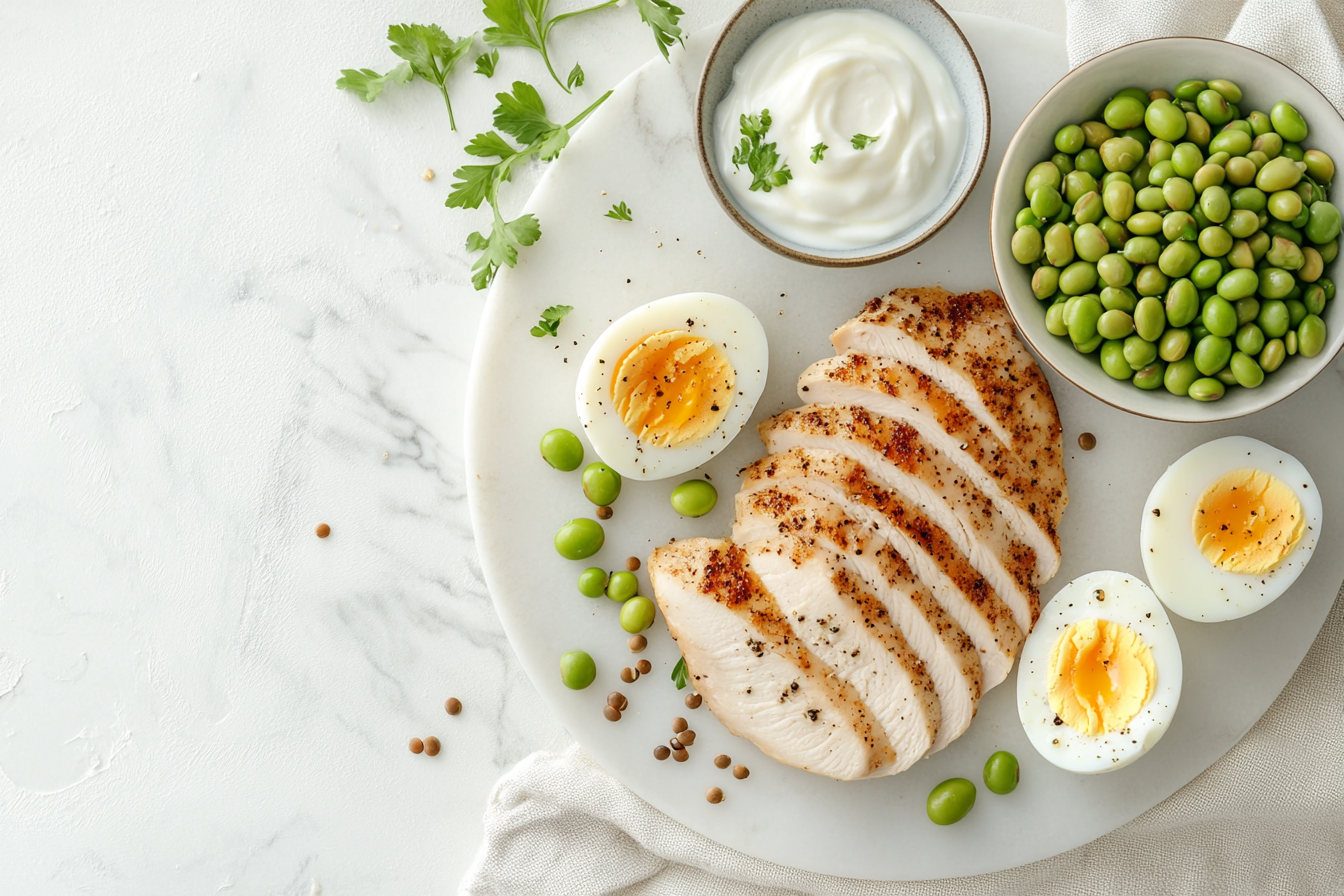
How Much Protein Do You Actually Need?
For decades, the standard protein recommendation has been 0.8 grams per kilogram of bodyweight per day. For a 70kg adult, that works out to roughly 56g of protein — about what you'd get from two chicken breasts. It sounds reasonable, but a growing body of research suggests this number is far too low for most people, particularly those who are active, over 40, or trying to change their body composition.
The New Target: 1.2–1.6g Per Kilogram
Current evidence now points to a range of 1.2 to 1.6 grams of protein per kilogram of bodyweight as a more appropriate target for healthy adults. For that same 70kg person, that means eating between 84g and 112g of protein per day — roughly double the old recommendation. For those in a calorie deficit or actively trying to preserve muscle mass, the research supports going even higher, up to 1.6g per kilogram of adjusted bodyweight.
Interestingly, average protein consumption in the UK and US already sits within or close to this new range for men (90–100g per day), though women tend to fall slightly short at 65–75g per day. This means many people are closer to optimal than they think — but the quality and distribution of that protein still matters.
Why Protein Matters More as You Get Older
The case for higher protein intake becomes particularly compelling after the age of 40. As we age, our muscles become less responsive to protein — a process called anabolic resistance — meaning you need more dietary protein to trigger the same muscle building signal you'd have had at 25. For adults over 40, especially those losing weight, adequate protein intake is one of the most important nutritional levers for preserving lean muscle mass.
Protein does a lot of the work to preserve your muscle while you're losing weight — but resistance training is far more important than dietary protein alone for maintaining muscle.
This is an important nuance. Protein supports muscle retention, but it works best in combination with resistance exercise. If you're in a calorie deficit and not doing any strength training, no amount of protein will fully offset muscle loss. The two work together.
Do You Need to Spread Protein Evenly Throughout the Day?
A common piece of advice is to distribute protein evenly across three or four meals to maximise absorption. The reality is more flexible. While spreading protein intake has some benefits for muscle protein synthesis, the body can absorb protein from a single large meal — absorption limits do not cap out at 20–30g per sitting as is often claimed. Total daily intake matters most.
Similarly, the idea that you must consume protein within 30 minutes of finishing a workout — the so called "anabolic window" — has been largely overstated. The window for post workout nutrition is closer to 24 hours. Eating a protein rich meal at some point after training is what matters, not racing to down a shake the moment you step off the gym floor.
What About Plant Based Protein?
One persistent myth is that plant proteins are "incomplete" and therefore inferior. In practice, most plant foods contain all 20 amino acids — including the 9 essential ones your body cannot produce on its own. When you eat a varied plant based diet and hit your total protein target, the distribution of amino acids across different foods largely takes care of itself. Legumes, tofu, tempeh, edamame, quinoa, and lentils are all strong protein sources.
- Lentils: ~18g of protein per 100g cooked
- Edamame: ~11g per 100g
- Firm tofu: ~8–10g per 100g
- Tempeh: ~19g per 100g
- Quinoa: ~4g per 100g cooked (a complete protein)
- Greek yogurt (dairy): ~10g per 100g
Don't Forget Fibre
A focus on hitting protein targets can sometimes crowd out other important nutrients. Only around 5% of people meet the recommended daily fibre intake — a deficit that has real consequences for gut health, cardiovascular health, and satiety. Legumes are one of the best tools for hitting both protein and fibre targets simultaneously, yet average legume consumption is less than 10g per day. Adding a tin of chickpeas, lentils, or black beans to your weekly rotation is one of the simplest nutritional upgrades you can make.
The Bottom Line
The 0.8g/kg guideline was never designed to optimise body composition — it was set as a minimum to prevent deficiency. For anyone who is active, over 40, or working toward a fat loss or muscle building goal, aiming for 1.2–1.6g of protein per kilogram of bodyweight is a well supported target. Helic builds this directly into your macro targets, so you always know exactly how much protein your meals need to provide.