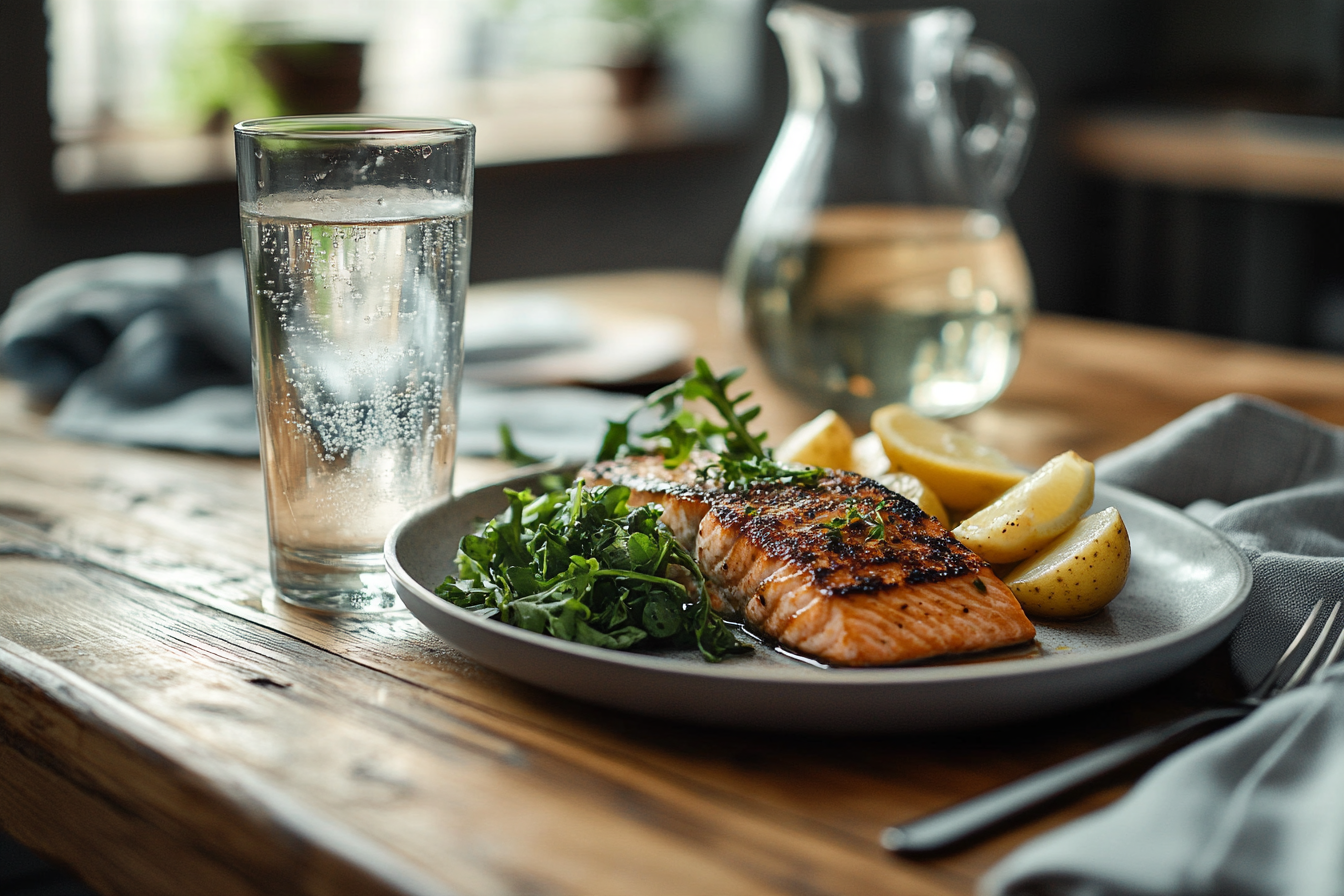
A Pint Before Dinner: Can Drinking Water Before Meals Help You Lose Weight?
Most weight-loss advice asks you to give something up. Eat less of this, cut out that, resist the biscuit tin. Advice that asks you to add something, and something free at that, is rare enough to be worth a closer look. "Drink a glass of water before you eat" has been around for decades, usually passed on as folk wisdom. The interesting thing is that it has also been tested properly, in a randomised controlled trial run through ordinary UK GP practices.
The results are encouraging but not dramatic, and the details matter more than the headline. Below is what the trial did, what it found, the most plausible reasons it might work, and the honest limits of what a single 12-week study can tell you.
The Birmingham Water Trial
Researchers at the University of Birmingham recruited 84 adults with obesity from general practices in the city. Everyone got the same basic support: a 30-minute face-to-face consultation on weight management at the start and a short follow-up phone call two weeks later. The groups then split. Half were asked to drink 500ml of water, roughly a pint, 30 minutes before each of their main meals. The other half were given a mental strategy instead: before eating, they were asked to imagine that their stomach was already full.
That comparison is cleverer than it first looks. Giving the control group something to do before meals means both groups had a pre-meal ritual and the same amount of attention from the researchers. If the water group lost more weight, it would be harder to put it down to simply paying more attention to eating. The trial also checked whether people were actually drinking the water by collecting all of their urine over 24 hours, which is a much more objective test than asking them.
What the Trial Found
After 12 weeks, the water group had lost 1.3kg more than the comparison group, and that difference was statistically significant. When the researchers adjusted for age, gender, ethnicity and level of deprivation, the gap was almost unchanged at 1.2kg, but it slipped just over the conventional threshold for significance. The authors described the result as preliminary evidence of a moderate benefit, which is a fair summary. It is a real signal, but not yet a certain one.
The more striking figures came from looking at how consistently people followed the advice. Participants who drank water before all three main meals lost an average of 4.3kg over the 12 weeks. Those who did it once a day or not at all lost just 0.8kg. That is a big difference, and it suggests consistency matters a great deal. It needs reading carefully, though. People chose how often they drank the water, so those who managed three times a day may simply have been more motivated in general. This part of the data shows a strong association, not proof that the water caused the extra loss.
Drinking before all three main meals was linked to 4.3kg lost in 12 weeks, against 0.8kg for those who rarely did it. The habit only works if it actually becomes a habit.
- Participants: 84 adults with obesity, recruited through GP practices.
- Intervention: 500ml of water 30 minutes before each main meal, for 12 weeks.
- Comparison: imagining a full stomach before meals, with the same basic support.
- Main result: 1.3kg more weight lost with water (1.2kg after adjustment, borderline significance).
- By adherence: 4.3kg lost when drinking before all three meals vs 0.8kg when doing it once a day or less.
Why Would Water Make a Difference?
The most likely explanation is simple mechanics. Half a litre of water takes up real space in the stomach, and stretch receptors in the stomach wall are one of the signals that tell your brain you have eaten enough. Arriving at the table with that signal already partly switched on may lead you to finish a meal sooner or turn down a second helping. An earlier American trial in older adults on a calorie-controlled diet points the same way. Drinking 500ml before meals reduced how much people ate at a test meal and led to around 2kg more weight loss over 12 weeks.
A second route is displacement. If you have just drunk a pint of water, you are less likely to reach for a sugary soft drink, juice or a large glass of wine with your meal. Liquid calories are easy to overlook because they do little to fill you up, so replacing even some of them with water can cut intake without any sense of going without. Water is sometimes also said to boost metabolism. Any such effect is small and inconsistent across studies, and it is unlikely to account for much of the result.
It is also worth noticing what the comparison group shows. Simply imagining a full stomach is a reasonable mindful-eating technique, and those participants also received weight-management advice. The water group beat that, which suggests the physical presence of the water added something beyond the ritual of pausing before a meal.
The Limits of the Evidence
This was a small, short trial. Eighty-four people over 12 weeks is enough to detect a signal but not enough to pin down its size with confidence, and we do not know whether the effect lasts, fades or grows over a year. The participants all had obesity, and the effect may well be smaller in people with less weight to lose. The 1.3kg difference is also modest in the context of a full weight-loss journey. It is a useful extra, not a strategy in its own right.
Still, few interventions this cheap and low-risk have even this much evidence behind them. Water costs nothing, takes seconds and carries virtually no downside for healthy adults. The exception is anyone who has been advised to limit fluids, such as people with heart failure or some kidney conditions, who should follow their clinical team's guidance rather than adding extra water.
Water before meals will not do the work of a calorie deficit. What it can do is make that deficit slightly easier to live with, three times a day.
How to Use This in Practice
The NHS suggests six to eight glasses of fluid a day for most adults, and a pint before each main meal covers a good share of that on its own. The trial points to a few details that make the habit more likely to work, and more likely to stick.
- Use the studied dose and timing: about 500ml of water, roughly 30 minutes before breakfast, lunch and dinner.
- Aim for all three meals. The people who did it consistently saw by far the biggest results.
- Tie it to something you already do, such as starting to cook or leaving your desk for lunch, so it does not rely on memory.
- Keep it plain. Water, sparkling water or other zero-calorie drinks work. Juice or a pre-dinner beer defeats the point.
- Keep your meals planned. The water helps you stop at the right point, but the deficit still comes from what is on the plate.
The appeal of water preloading is that it works with your body rather than against it, taking a small edge off your appetite at exactly the moment it matters. It will not rescue an unplanned diet, but alongside well-portioned meals it is one of the easiest habits you can build. Helic takes care of the portions, building each day's meals around your calorie and protein targets, so a pint of water before dinner can do its quiet bit on top.